Introduction
With technology investments growing each year, businesses are increasingly turning to the top IT asset management software to manage their devices, software, and digital infrastructure more effectively. IT Asset Management (ITAM) tools make it possible to track every piece of hardware, software license, and cloud subscription from one central system.
The market is full of solutions, but not all offer the scalability, integration, or intelligence modern organizations require. Selecting the right IT asset management (ITAM) platform can transform how you track, manage, and optimize your hardware, software, and cloud assets. With so many solutions available, knowing the top options helps you make smarter choices. In this article we list the top IT asset management software for 2026, highlighting 15 standout tools, what they offer, and how to choose among them.
What Makes a Top ITAM Tool?
The best ITAM software offers more than just tracking. A top platform should:
- Provide a single source of truth for all hardware, software, and licenses
- Automate asset discovery and updates across hybrid environments
- Support compliance with software licensing and audit requirements
- Deliver analytics and lifecycle insights to guide IT spending decisions
- Scale easily as the organization expands to new locations or business units
Each tool in this list meets these standards, though some specialize in niche areas like SaaS visibility, automation, or hybrid infrastructure management.
Top 15 IT Asset Management Software in 2026
1. Strev.ai
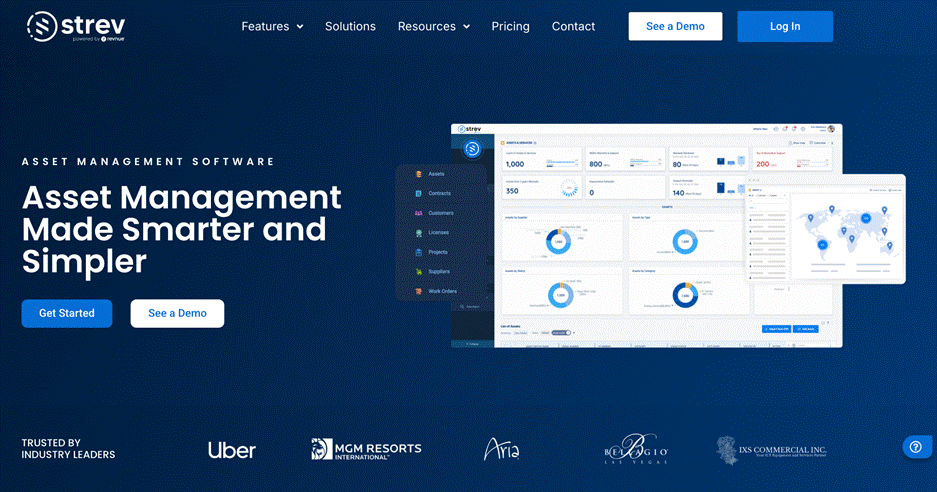
Strev.ai is a modern, intuitive asset management platform built for organizations that want clarity, structure, and complete control of their IT ecosystem. It simplifies hardware, software, and license tracking across multiple locations while providing powerful reporting and workflow automation. Strev.ai stands out for its ease of use, rapid implementation, and clean interface designed for teams of all sizes.
Strev Lite, the newest addition to the Strev ecosystem, allows small teams and growing businesses to track assets for as low as $1 per asset per month, making professional asset management accessible without enterprise costs.
Features:
- Complete hardware and software asset lifecycle tracking – Strev provides full visibility from procurement to retirement, allowing teams to monitor asset age, usage, assignments, condition, and depreciation without switching between tools. Each asset maintains a detailed history so IT can make confident decisions about repairs, refresh cycles, and replacements.
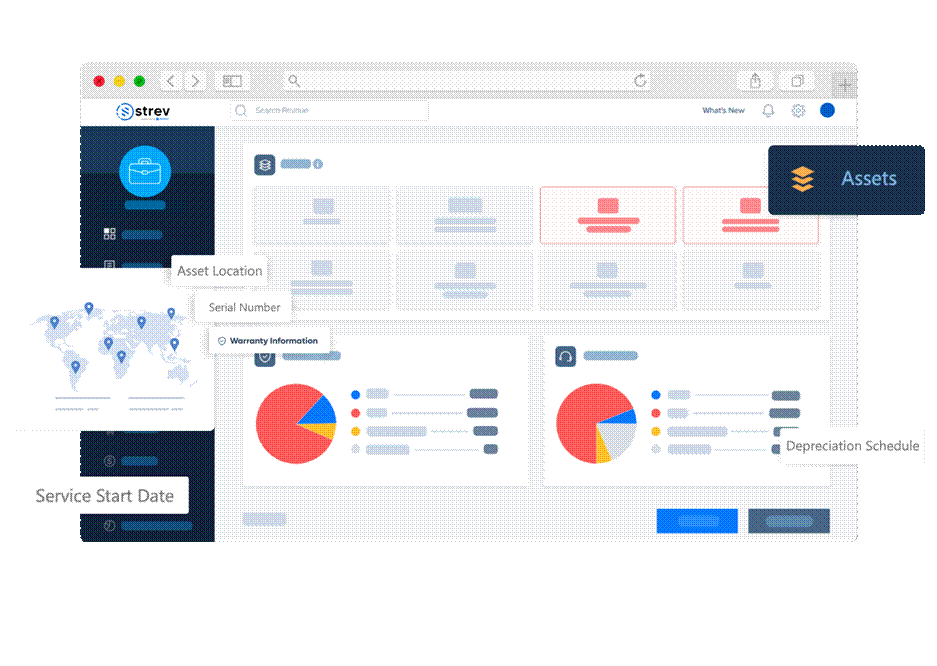
- Multi-location support with role-based access – Designed for distributed teams, Strev lets organizations manage assets across offices, warehouses, remote users, and field teams in one unified platform. Custom roles and permissions ensure that each department sees only what they need while maintaining centralized control.
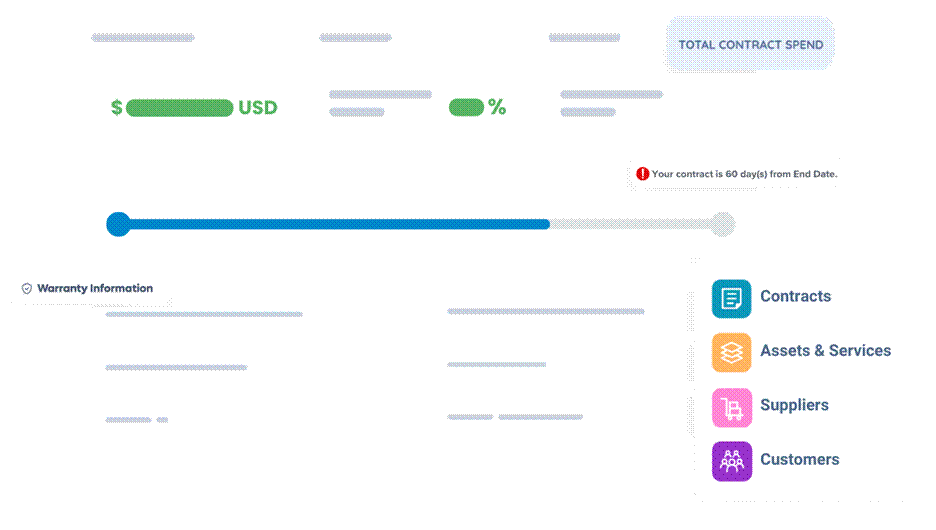
- Configurable workflows and approval processes – Strev adapts to your internal processes instead of forcing you to change them. You can create request workflows, handover steps, maintenance routing, or approval paths that match your operational structure. This eliminates manual follow-ups and ensures smooth asset movement.
- License monitoring and contract tracking – Software licenses, SaaS subscriptions, and vendor contracts are all tracked with automated reminders. Strev helps prevent unexpected renewals, compliance gaps, and overspending on unused tools by giving teams complete insight into entitlements and usage.
- QR and barcode tagging – Each asset can be tagged with scannable codes for instant updates. Teams can complete audits in minutes, verify asset ownership onsite, and reduce loss or misplacement by digitizing physical tracking.
- Comprehensive dashboards, audit logs, and deep usage analytics – Strev delivers real-time insights into asset status, health, depreciation, utilization, upcoming replacements, and spend patterns. Every update is logged, creating a reliable audit trail that supports compliance and operational accountability.
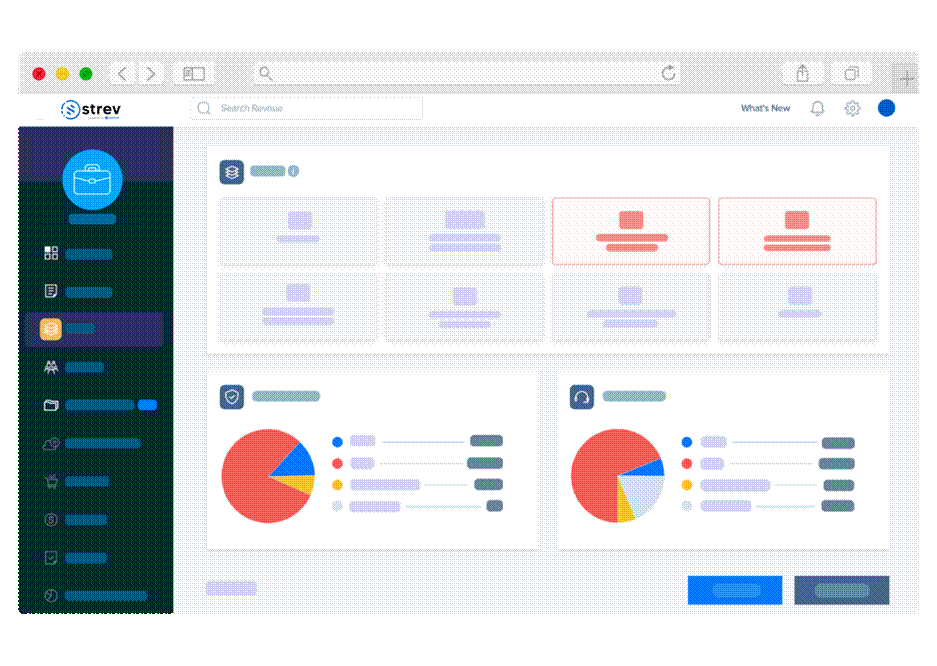
- Strev Lite: lightweight asset tracking for as low as $1 per asset per month – Strev offers an affordable entry point for small businesses, individuals, and teams that want to start digitalizing their asset tracking without complexity. It includes mobile-friendly QR scanning, centralized records, and simple reporting while giving users a seamless upgrade path to the full Strev.ai platform whenever they’re ready.
Pricing:
- Strev Lite: Starts at $1 per asset per month
- Strev.ai Core: Custom pricing based on modules and asset capacity
2. InvGate Asset Management
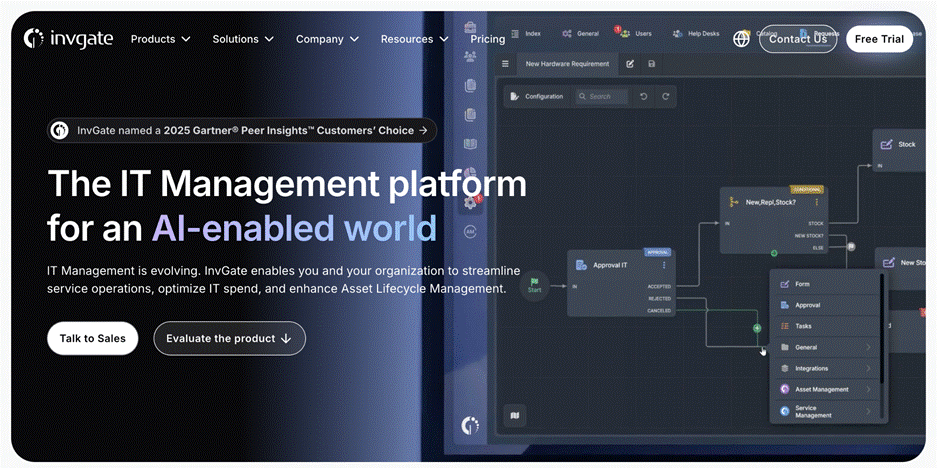
InvGate provides comprehensive visibility into hybrid IT environments through automated discovery and real-time dashboards. It supports both on-premises and cloud deployments, making it adaptable for organizations with diverse infrastructures. InvGate’s analytics-driven reporting helps teams identify unused licenses, forecast procurement needs, and maintain software compliance.
Features:
- Automated hardware and software discovery
- License compliance and reconciliation
- Service desk integration
- Custom dashboards and analytics
- On-premises or cloud deployment
Pricing:
- Pricing available on their website upon request
3. EZO AssetSonar
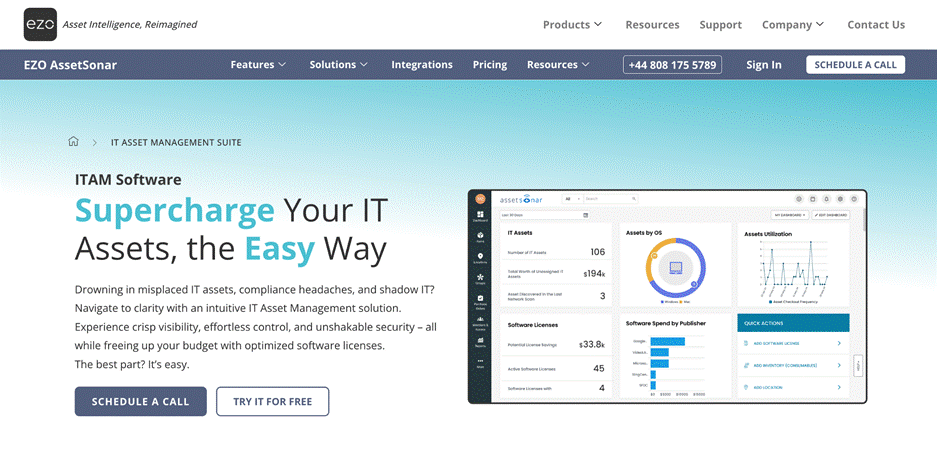
Known for balancing usability with depth, AssetSonar supports both hardware and SaaS tracking. Teams can monitor device performance, software compliance, and contract renewals all from one system. Integration with leading (Information Technology Service Management) Its straightforward interface makes adoption easy across departments.
Features:
- Hardware and SaaS asset inventory
- License governance
- Contract and renewal management
- Integrations with Google Workspace, Azure AD, Slack, Zendesk, and more
Pricing:
- Starts at roughly $69/month depending on modules
4. Flexera One IT Asset Management
Designed for enterprise scale, Flexera specializes in hybrid IT visibility and cost control. It delivers in-depth analytics on license optimization and helps identify underutilized resources, making it a go-to for corporations focused on financial efficiency.
Features:
- Advanced license optimization
- Compliance management
- Cloud cost management
- Automated inventory discovery
- Audit-ready reporting
Pricing:
- Custom enterprise pricing
5. Asset Panda
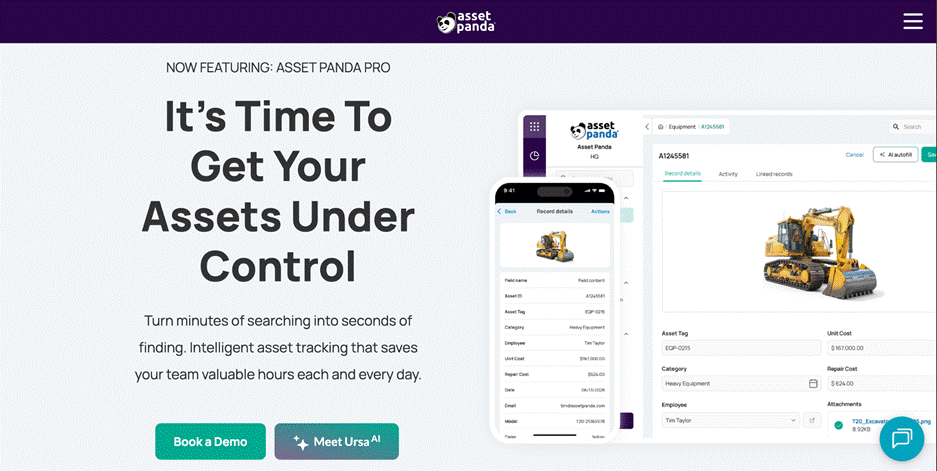
Asset Panda is a highly configurable solution that lets you create custom asset workflows without technical setup. Its mobile app enables teams to scan, update, and manage assets in the field, making it a practical choice for organizations with distributed operations.
Features:
- Custom workflows
- Mobile app with offline mode
- Barcode/QR scanning
- Configurable reports and dashboards
Pricing:
- Starts at $60 per user/month (varies by users and modules)
6. ServiceNow IT Asset Management
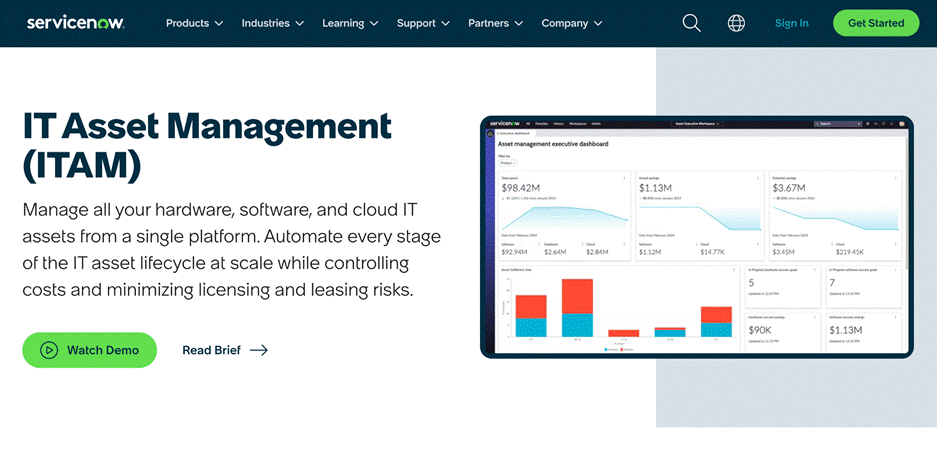
ServiceNow is a trusted enterprise platform that unifies IT Asset Management with IT service management. Beyond lifecycle tracking, it automates procurement, contract renewals, and compliance that makes it perfect for large organizations that require process standardization across departments.
Features:
- Asset lifecycle automation
- CMDB integration
- Procurement and contract workflows
- Compliance and audit tracking
Pricing:
- Enterprise pricing only
7. SolarWinds Service Desk
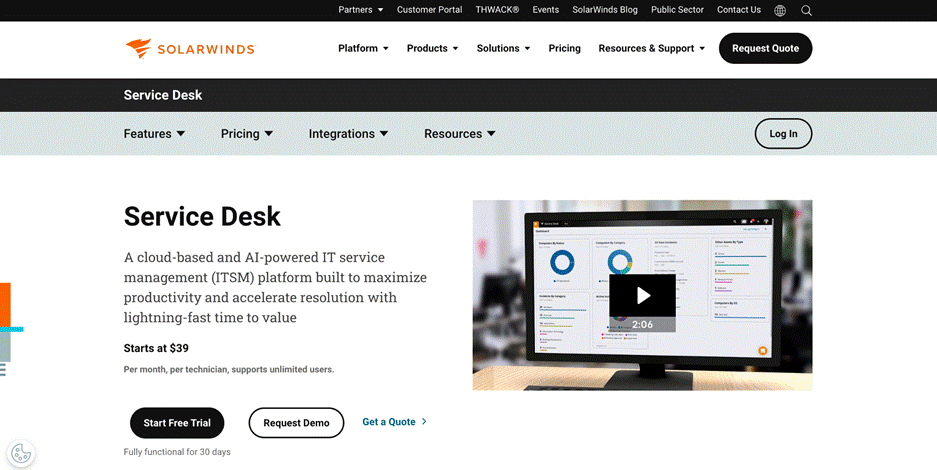
Combines IT service management (ITSM) capabilities with a clean and accessible asset management module. SolarWinds provides device insights, purchase history, and license data in real time. Its approachable design makes it easy for non-technical users to adopt quickly.
Features:
- Asset inventory
- Contract and warranty tracking
- Incident and service management
- Automation workflows
Pricing:
- Plans start around $39 per user/month
8. ManageEngine AssetExplorer
A reliable option for mid-sized organizations seeking control and scalability. It covers asset discovery, license tracking, and compliance, with reports that can be customized to meet internal audit requirements. Deployment flexibility (on-premises or cloud) adds extra convenience.
Features:
- Asset discovery
- Software license compliance
- Purchase and contract management
- Customizable reporting
Pricing:
- Starts around $1,195 per year for 250 nodes
9. Snipe-IT
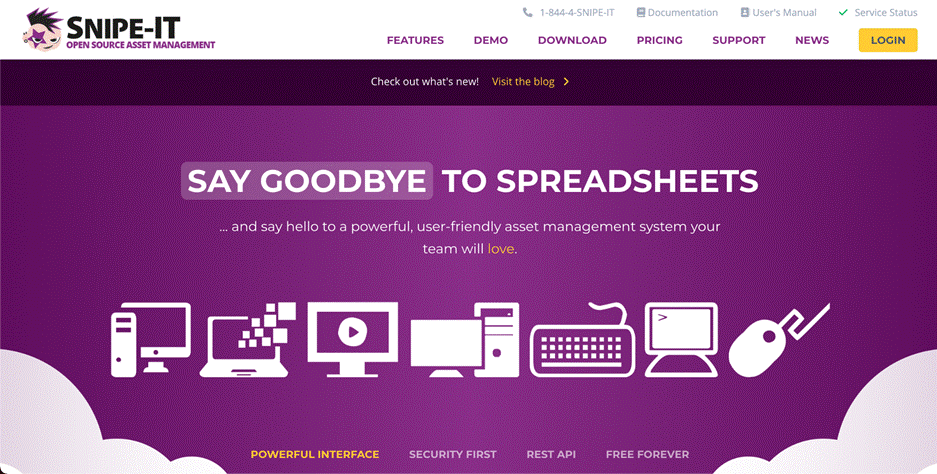
A free, open-source tool loved by tech-savvy teams. Snipe-IT allows complete control of deployment and data while providing robust features like user assignment tracking, asset history logs, and barcode support. For startups and IT departments on a budget, it’s a capable and secure alternative.
Features:
- Asset assignment tracking
- License and accessory management
- Barcode support
- Extensive API for customization
Pricing:
- Self-hosted: Free
- Dedicated Cloud Hosting: $249.99/month
10. Zluri
A SaaS management and IT asset visibility platform that helps businesses track every subscription across departments. It identifies duplicate or unused tools, saving money and simplifying renewals. Zluri’s interface is sleek and analytics-driven, which makes it perfect for companies with heavy cloud adoption.
Features:
- SaaS discovery
- Usage analytics
- Renewal alerts
- Vendor and contract insights
Pricing:
- Available on website upon request
11. Lansweeper
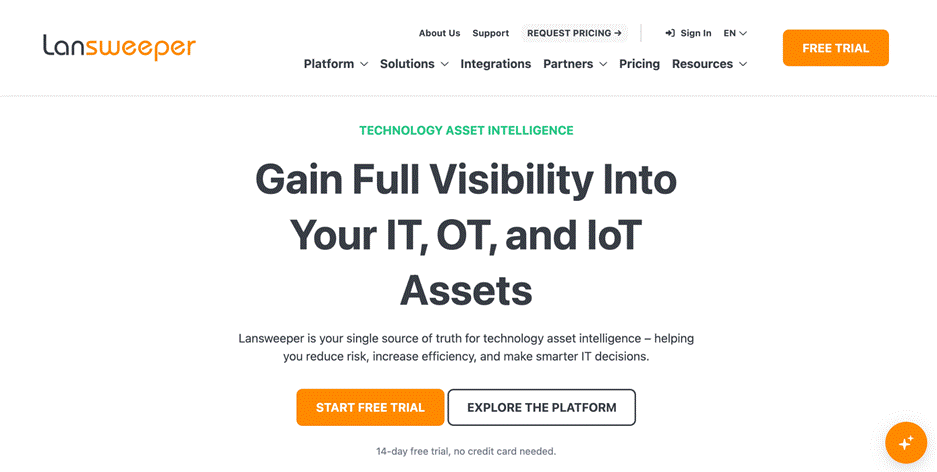
Built for strong network discovery, Lansweeper automatically detects every device connected to your infrastructure. It integrates with IT Asset Management (ITAM), Information Technology Service Management (ITSM), and Configuration Management Database (CMDB) tools, providing a complete view of both hardware and software across all locations.
Features:
- Network device discovery
- Inventory reporting
- CMDB integration
- Vulnerability insights
Pricing:
- Free tier available
- Paid plans start around € 219/month
12. IBM Maximo
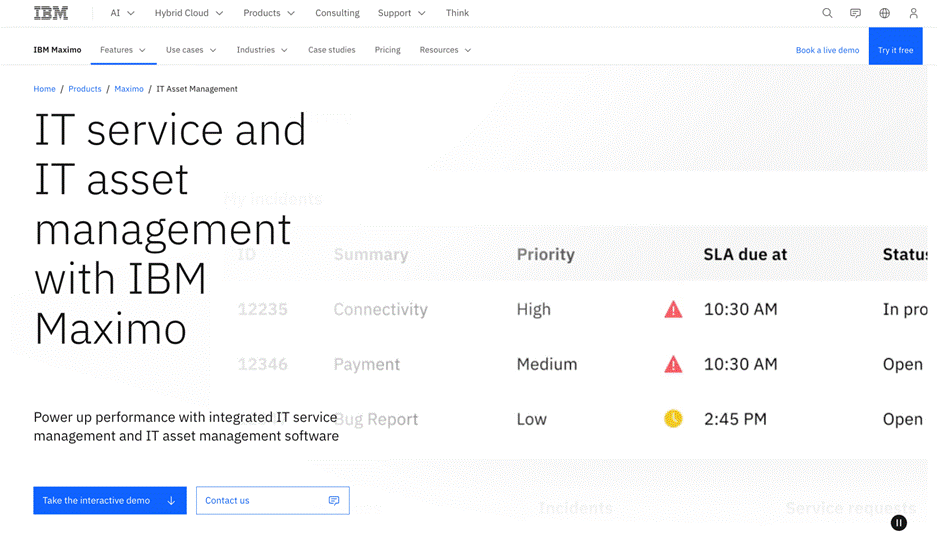
IBM Maximo is a legacy enterprise leader that continues to evolve. Maximo now includes IoT and predictive maintenance features, making it useful for organizations managing both IT and operational assets. It’s powerful, but best suited for large-scale, process-heavy enterprises.
Features:
- Predictive maintenance
- IoT-enabled monitoring
- Work order and lifecycle management
- High customization
Pricing:
- Custom enterprise pricing
13. AssetTiger
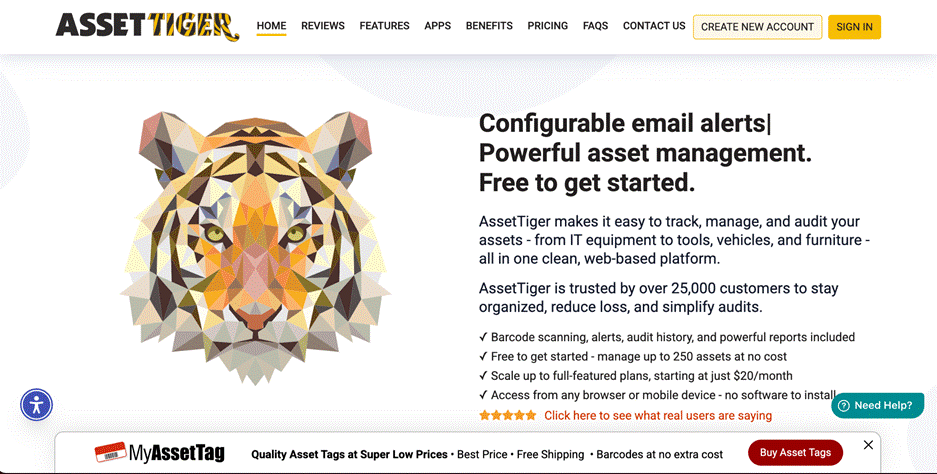
A simple yet reliable cloud-based solution ideal for smaller organizations. It supports barcode scanning, depreciation tracking, and maintenance scheduling. The free tier makes it especially appealing to businesses just starting their asset management journey.
Features:
- Barcode tracking
- Maintenance reminders
- Depreciation reports
- Mobile-friendly interface
Pricing:
- Free for up to 250 assets
- Paid core plans start around $440 per year for 2,500 assets
14. Freshservice
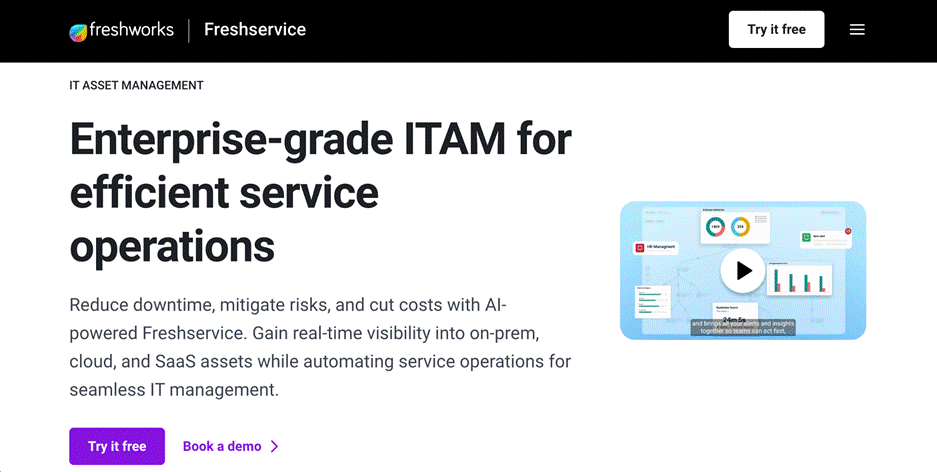
Combines IT service delivery with AI-enhanced asset tracking. Freshservice automates common workflows and provides insights into asset utilization, helping IT teams proactively manage resources. Its interface is polished and beginner-friendly, making onboarding quick.
Features:
- Asset discovery
- Contract and license tracking
- AI-powered workflow automation
- Incident and change management
Pricing:
- Starts at $19 per user/month
15. Virima
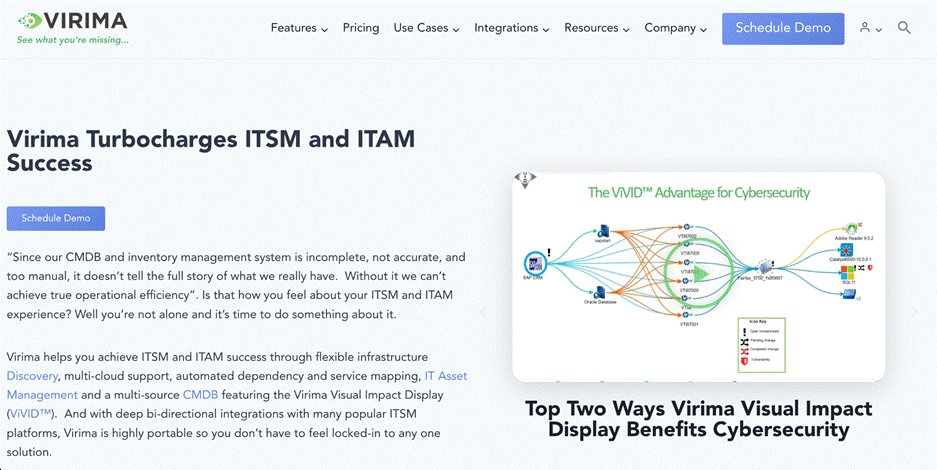
Tailored for enterprise IT environments, Virima goes beyond asset management with visual relationship mapping. It helps teams understand dependencies between hardware, software, and services that are critical for maintaining uptime and managing change effectively.
Features:
- Visual service mapping
- Discovery and inventory
- CMDB automation
- Analytics and reporting
Pricing:
- Custom pricing
How to Choose the Right Tool for Your Business
| Factor | What to Consider |
| Business Size | Smaller organizations may prefer cloud-based systems that are easy to set up and maintain, while large enterprises often need advanced automation, role-based controls, and custom integrations. Consider how many assets and users the platform needs to support today and in the next few years. |
| Deployment | Cloud platforms provide flexibility and remote access, which is ideal for companies with distributed teams. On-premises deployment, on the other hand, may suit organizations in highly regulated industries that require strict data control and compliance with internal hosting policies. |
| Integration | Your ITAM solution should not operate in isolation. Look for tools that connect seamlessly with HR, procurement, and ITSM systems so data flows automatically between departments. Integration reduces duplicate work and ensures reports reflect accurate, up-to-date information. |
| Scalability | Growth can happen faster than expected. Choose a solution that scales easily as your asset base expands or as you open new locations. The right tool should handle additional users, new sites, and higher data volume without performance issues or major reconfiguration. |
| Ease of Use | Even the most feature-rich system fails if your team struggles to use it. Prioritize platforms with intuitive navigation, clean dashboards, and minimal setup complexity. A user-friendly interface shortens the learning curve and encourages consistent data entry across all departments. |
Before committing, take advantage of free trials and demos to see how well the tool fits your real workflows. Review vendor documentation, customer support options, and implementation assistance. Most importantly, involve both IT and finance stakeholders in the evaluation process to ensure the tool supports your organization’s operational and reporting goals.
Emerging Trends in IT Asset Management for 2026
The IT asset management landscape is evolving rapidly, shaped by automation, sustainability goals, and the increasing complexity of hybrid environments. These trends are influencing how businesses select and use their tools today.
AI-Driven Insights
Artificial intelligence continues to transform ITAM systems by automating repetitive processes like data entry, discovery, and license tracking. More advanced solutions can now analyze usage data to predict when an asset will need maintenance or when a license is likely to expire. This shift helps IT teams focus on strategic planning rather than administrative work.
SaaS Spend Management
As organizations adopt hundreds of SaaS tools, tracking usage and renewals manually is no longer feasible. Modern ITAM solutions now include SaaS management features that monitor subscriptions, flag redundant tools, and calculate the true cost of each application. This visibility helps finance and IT leaders reduce unnecessary spending.
Sustainability and Green IT
Companies are becoming more conscious of their environmental footprint. Asset management platforms are beginning to include sustainability tracking, showing energy consumption and carbon impact per device. These insights help organizations extend asset lifecycles and make greener purchasing decisions.
Unified Visibility Across Environments
With the rise of hybrid and remote work, IT assets are scattered across offices, home networks, and cloud platforms. Centralized dashboards now integrate data from multiple systems, giving IT leaders a real-time view of hardware, software, and cloud infrastructure in one place. This not only improves accuracy but also strengthens data-driven decision-making.
In 2026, these advancements are pushing ITAM beyond inventory tracking—turning it into a strategic function that drives cost efficiency, compliance, and sustainability across the enterprise.
Conclusion
The top IT asset management software in 2026 reflects how organizations are moving beyond spreadsheets toward connected, intelligent ecosystems. Modern ITAM tools no longer serve just as trackers; they are now central to how businesses control costs, strengthen compliance, and drive operational efficiency.
Choosing the right software is not about ticking boxes. It’s about identifying a system that fits your organization’s unique structure, integrates seamlessly with your existing tools, and scales as you grow. The right platform gives you complete visibility across locations, automates repetitive work, and provides accurate data you can trust. With these insights, IT teams can forecast needs, extend asset lifecycles, and make smarter investment decisions.
A well-implemented ITAM solution also creates value beyond IT. Finance teams gain better control over spending, operations benefit from improved coordination, and leadership can make data-backed choices with confidence. When all departments share the same information source, collaboration becomes easier and accountability improves.
If you are ready to modernize how your organization manages technology assets, consider Strev.ai. It combines simplicity with scalability, giving teams a unified platform that brings structure, clarity, and confidence to every stage of asset management. Whether you are a growing business or an established enterprise, Strev helps you stay organized, compliant, and ready for what’s next.