By 2026, most organizations will not be struggling because they lack software. They will struggle because they don’t know which licenses are actually in use, which ones are quietly renewing, and which tools different teams are paying for without visibility. In many companies, license data lives across procurement emails, finance systems, spreadsheets, and vendor portals, making it difficult to answer even basic questions about ownership and usage.
This disconnect creates real consequences. IT teams face surprise audits, finance teams see unexplained cost increases, and leaders hesitate to standardize tools because no one fully trusts the data. License management is no longer a back-office task. It has become a core operational discipline. That is why choosing the right license management tools in 2026 is less about feature volume and more about clarity, control, and how well a platform fits into daily workflows.
Below are the top license management platforms that stand out in 2026 based on capability, usability, and long-term fit.
1. Strev.ai
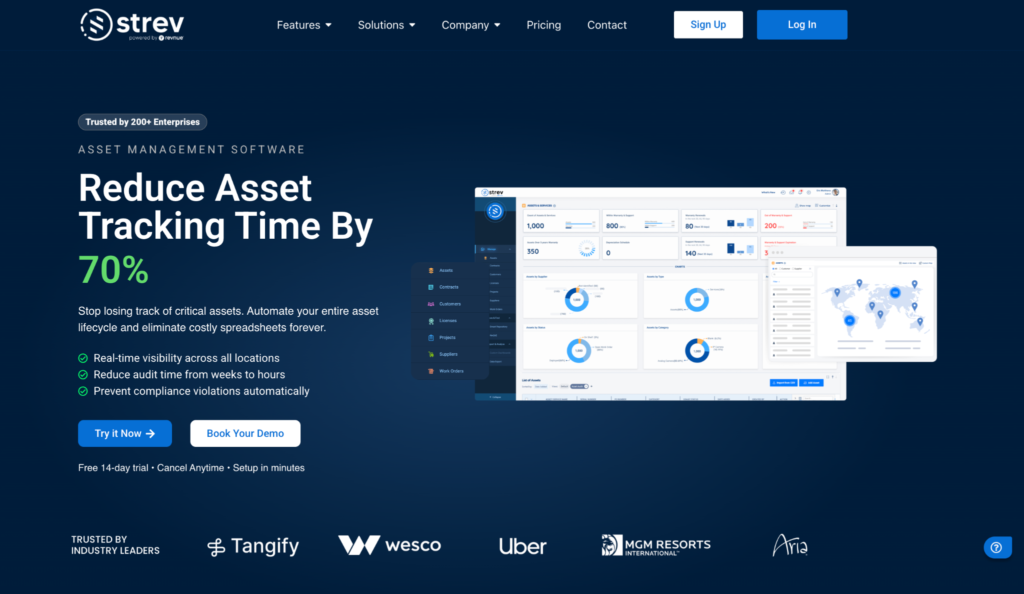
Strev.ai takes a fundamentally different approach to license management by treating licenses as part of a broader asset lifecycle, not standalone records. Instead of managing licenses in isolation, Strev connects them directly to hardware, users, contracts, and lifecycle events, giving teams a complete and trustworthy view of what they own, what is assigned, and what is actually being used.
For IT and finance teams, this removes a common pain point. License data no longer lives across multiple systems or spreadsheets. Renewals, compliance status, and usage insights are surfaced in one place, making it easier to answer questions quickly and avoid surprises. The platform is intentionally designed to stay intuitive, even as environments scale across locations and departments.
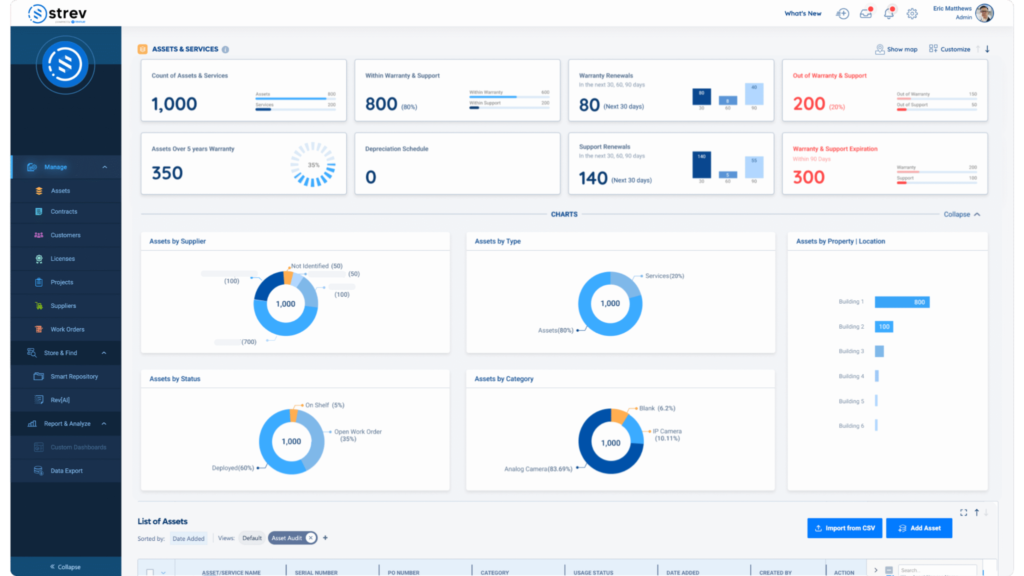
What truly sets Strev apart is its flexibility across business sizes. Large organizations benefit from multi-location support, role-based access, configurable workflows, and detailed audit logs. At the same time, smaller teams are not forced into unnecessary complexity.
To support that range, Strev has launched Strev Lite, a lightweight version built for small businesses, individuals, and growing teams that want to digitalize license and asset tracking without enterprise overhead. With pricing starting as low as $1 per asset per month, Strev Lite makes structured license management accessible while offering a seamless upgrade path to the full Strev.ai platform when needs evolve.
Key Features:
- License tracking linked to assets, users, and contracts
- Renewal reminders and compliance visibility
- Usage insights to identify unused or underused licenses
- Centralized dashboards with full audit history
- Multi-location support with role-based permissions
- Strev Lite for affordable, entry-level license and asset management
Best for: Organizations that want license management tightly integrated with asset lifecycle management, without sacrificing usability or scalability.
2. Flexera One
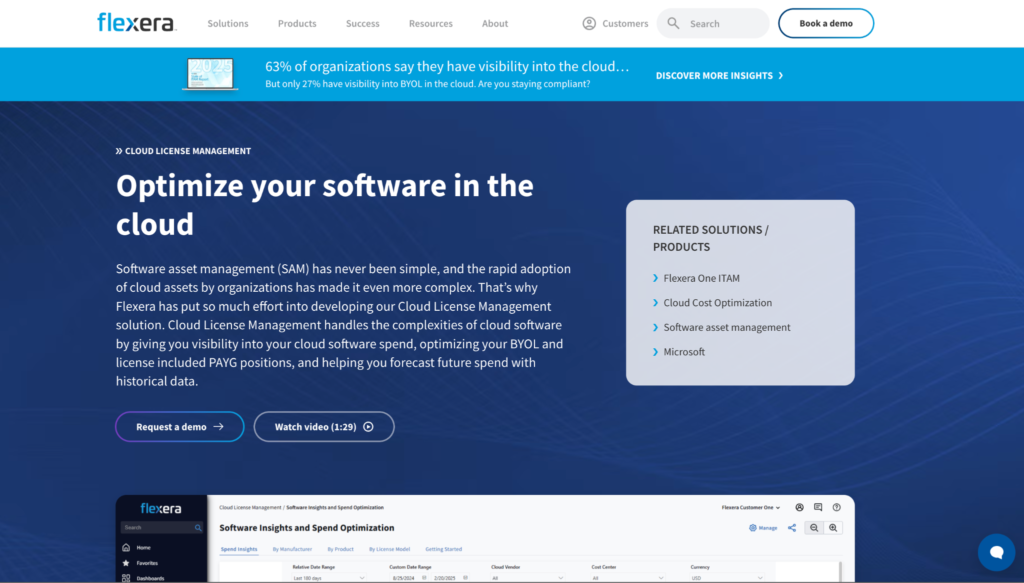
Flexera One is often selected by organizations that already operate at enterprise scale and manage large volumes of complex licensing agreements. Its strength lies in license normalization and reconciliation, particularly for vendors with intricate metrics and contractual rules.
Teams typically use Flexera to answer difficult questions around entitlement gaps, audit exposure, and optimization opportunities across on-prem and cloud environments. This makes it a strong fit for organizations with mature ITAM practices and formal audit processes.
That depth comes at a cost. Implementations tend to be lengthy, and ongoing management often requires specialized expertise. For teams without dedicated ITAM roles, Flexera can feel heavier than necessary.
Key Features:
- License normalization and reconciliation
- Vendor-specific licensing intelligence
- Cloud and hybrid environment visibility
- Audit readiness and compliance reporting
- Software spend optimization analytics
Best fit: Large enterprises with established ITAM teams and frequent vendor audits.
3. Zluri
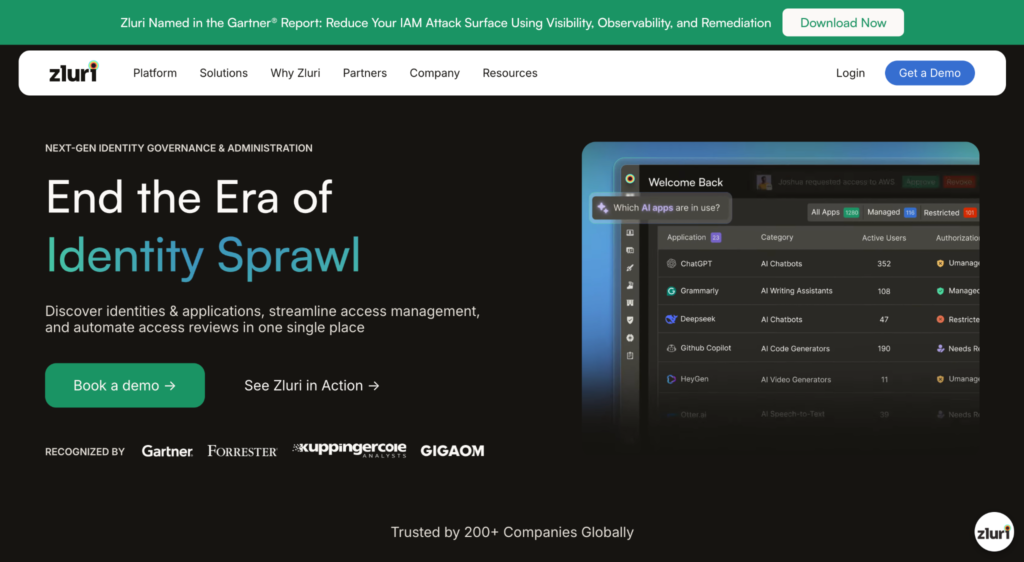
Zluri approaches license management from a SaaS discovery and spend optimization angle. It is commonly adopted by organizations that struggle to understand which SaaS tools are actively used and which subscriptions quietly renew without visibility.
Finance and operations teams value Zluri for its clean dashboards and clear usage data. It enables faster decisions around renewal cancellations and tool consolidation.
Zluri works best as a focused SaaS layer rather than a full asset lifecycle system.
Key Features:
- SaaS discovery across departments
- License usage and adoption tracking
- Renewal and contract alerts
- Vendor spend insights
- Application rationalization tools
Best fit: SaaS-heavy organizations prioritizing subscription visibility and cost control.
4. USU Software Asset Management
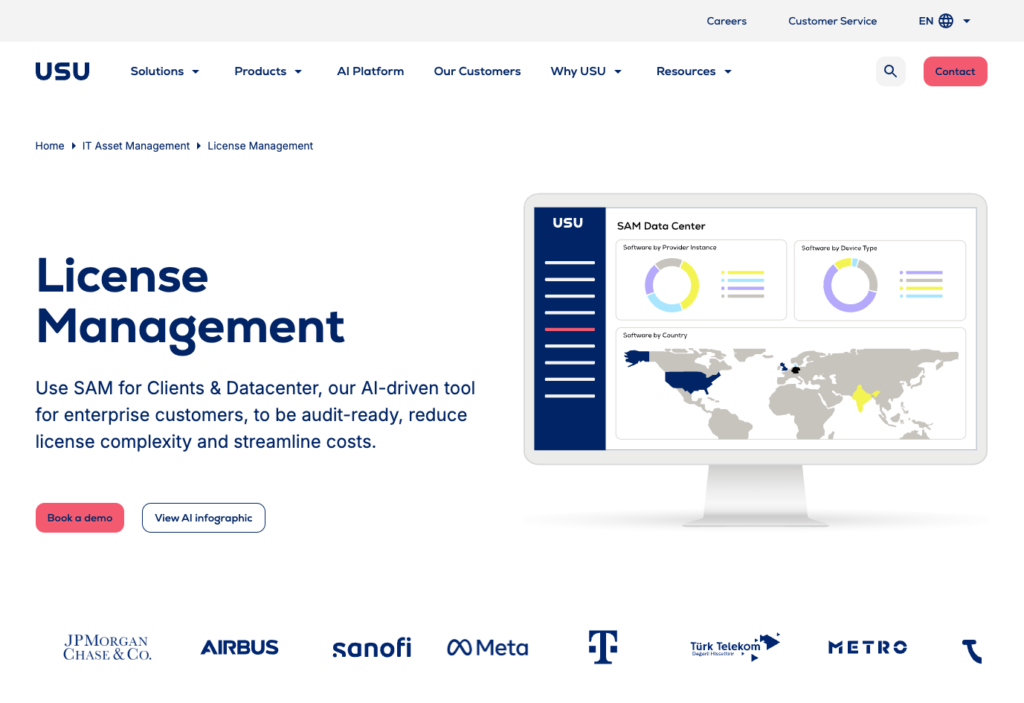
USU Software Asset Management is commonly adopted by organizations that need strong control over complex software licensing without committing to an overly rigid enterprise stack. It is especially popular in Europe and regulated industries, where compliance accuracy and defensible audit data are critical.
USU stands out for its detailed license reconciliation and its ability to model complex licensing rules across major vendors. Teams use it to understand entitlement gaps, optimize license positions, and reduce exposure during audits. The platform provides depth where it matters most, particularly for organizations managing a mix of on-prem, virtual, and cloud-based software.
While USU offers strong analytical capabilities, it assumes a certain level of process maturity. It works best when license management is treated as a formal discipline rather than an ad hoc task, making it less suitable for very small teams or early-stage ITAM programs.
Key Features:
- Advanced license reconciliation and optimization
- Vendor-specific licensing intelligence
- Compliance and audit readiness reporting
- Support for on-prem, virtual, and cloud licenses
- Entitlement modeling and risk analysis
Best fit: Mid-to-large organizations with structured license governance and audit exposure.
5. ServiceNow Software Asset Management
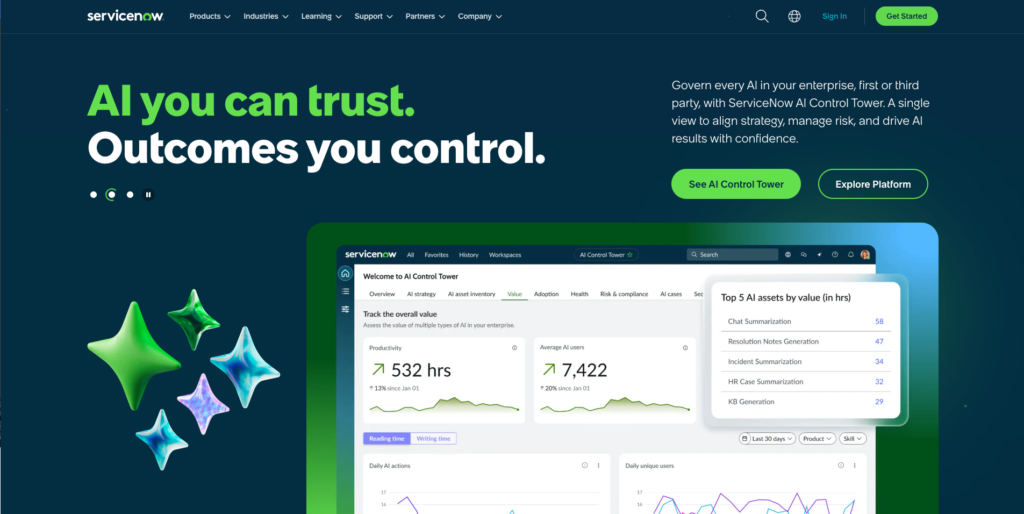
ServiceNow Software Asset Management is typically adopted by organizations that already run a significant portion of their IT operations on the ServiceNow platform. Rather than acting as a standalone license management tool, it embeds license tracking into a broader operational framework that includes procurement, service delivery, and configuration management.
This integration allows license data to flow directly into change management, incident handling, and financial workflows. For huge organizations, this creates consistency across IT processes and reduces data duplication between systems. License compliance and entitlement tracking become part of daily processes instead of isolated reporting.
However, this approach assumes scale and process maturity. Teams looking for lightweight or standalone license management may find ServiceNow more complex than necessary, especially if they are not already invested in the ecosystem.
Key Features
- License lifecycle automation
- CMDB and procurement integration
- Compliance and policy enforcement
- Workflow-driven approvals
- Enterprise-scale reporting
6. ManageEngine AssetExplorer
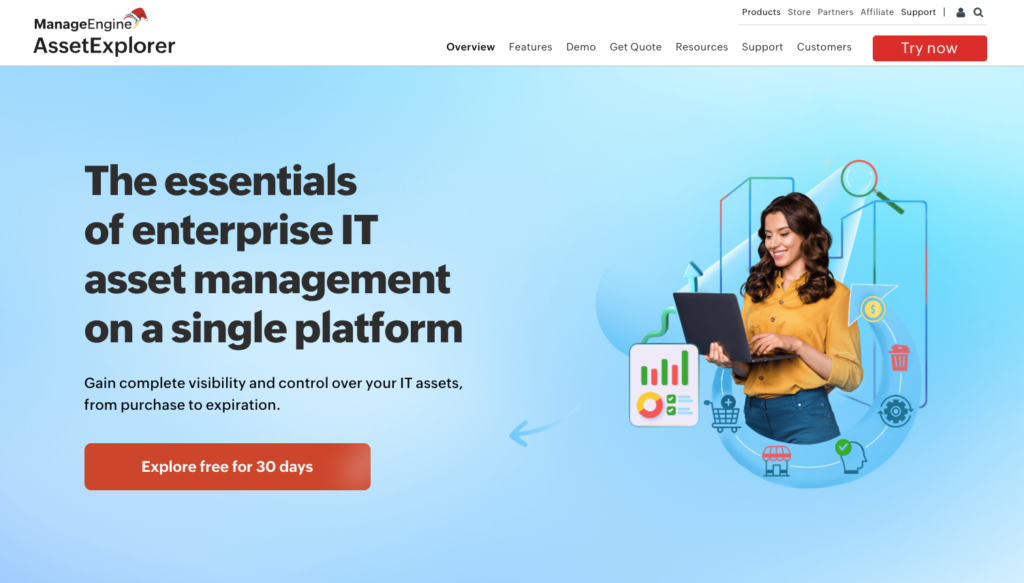
ManageEngine AssetExplorer offers a practical balance between capability and cost. It provides core license tracking, discovery, and compliance features without requiring extensive configuration.
Teams often choose it when they need something more structured than spreadsheets but are not ready for enterprise-level complexity.
Key Features
- Software license tracking and compliance
- Automated discovery
- Contract and renewal management
- Customizable reports
- Hardware and software inventory
7. Snipe-IT
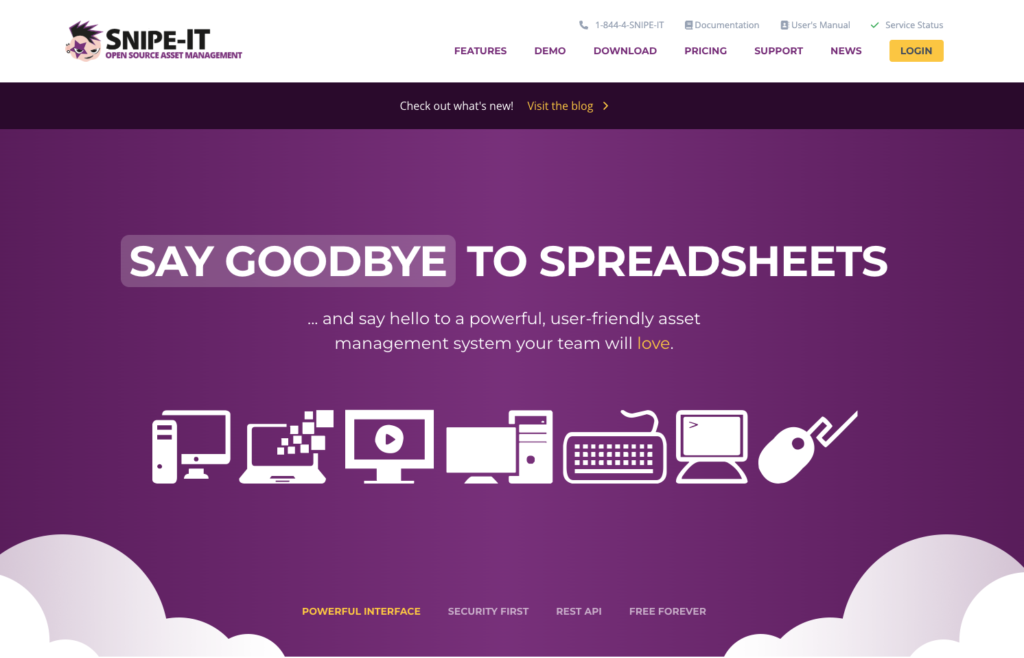
Snipe-IT is favored by technical teams that want control and transparency. Being open source, it allows organizations to tailor license tracking to their own processes rather than adapting to a vendor-defined workflow.
That flexibility comes with responsibility. Teams must manage hosting, updates, and customization themselves.
Key Features
- License assignment tracking
- Asset and accessory management
- Barcode support
- Role-based permissions
- REST API for customization
8. Ivanti License Optimizer
Ivanti License Optimizer focuses on entitlement accuracy and cost optimization, particularly in regulated or highly structured environments. It helps organizations identify compliance gaps and reduce exposure.
It performs well in environments where governance and policy adherence matter more than ease of use. The tool helps reduce exposure during audits and contract reviews.
Its narrower scope means it is often paired with other asset or service management platforms rather than used alone.
Key Features
- License entitlement tracking
- Compliance monitoring
- Optimization recommendations
- Vendor contract insights
Best fit: Compliance-driven organizations with strict licensing controls.
9. Certero for Enterprise SAM
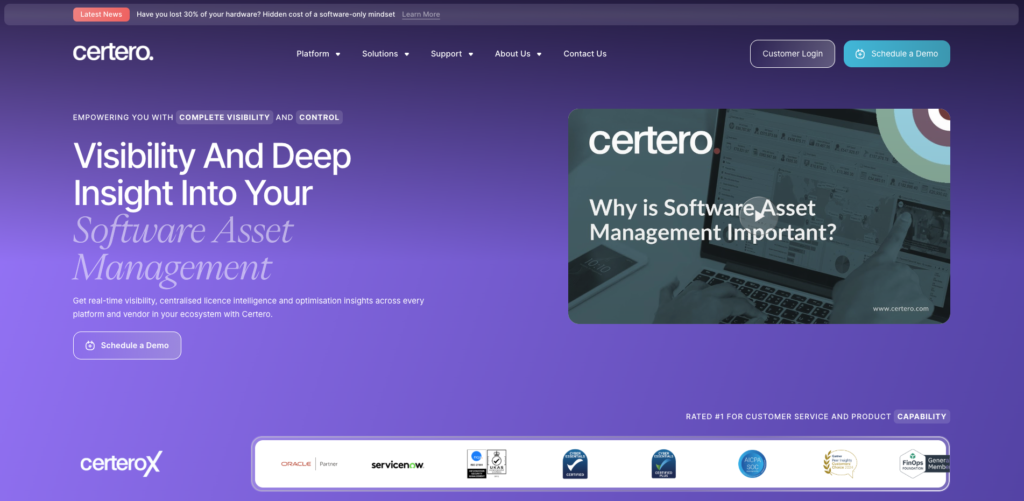
Certero positions itself as a visibility and automation platform across SaaS, cloud, and on-prem licenses. Its reporting capabilities help teams quickly identify risk areas and optimization opportunities.
The platform supports a wide range of licensing models and provides dashboards that make complex data easier to interpret. This is particularly helpful for organizations managing diverse software portfolios.
Certero is strongest in reporting and oversight, rather than day-to-day operational workflows. Its visual dashboards help teams quickly identify risks and optimization opportunities.
Key Features
- License compliance reporting
- SaaS and cloud license tracking
- Automated reconciliation
- Visual dashboards
Best fit: Enterprises needing consolidated license visibility across environments.
10. OpenLM
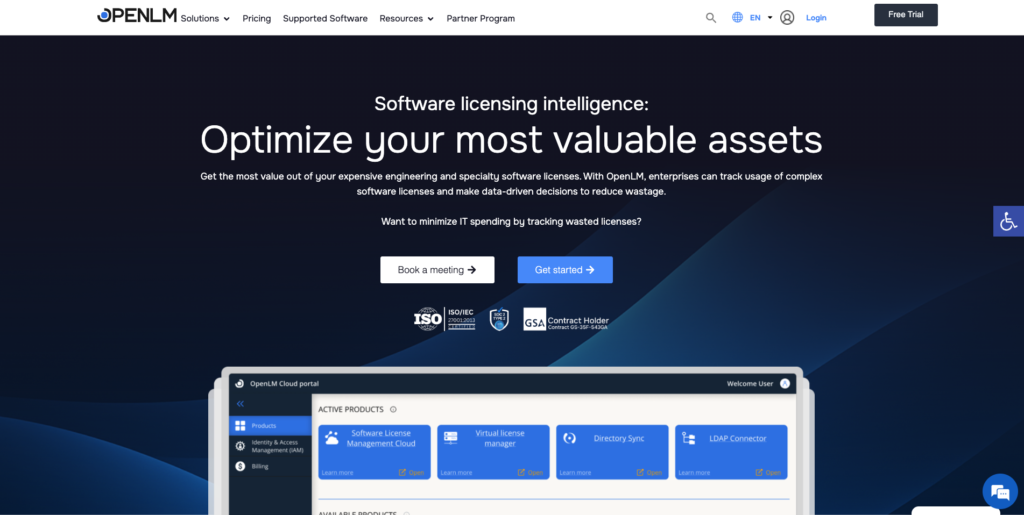
OpenLM is purpose-built for managing high-value technical and engineering licenses. Instead of focusing on general IT software, it tracks real-time usage of concurrent and specialized applications.
This focus makes it extremely effective in its niche, though less applicable for broader enterprise license management.
While highly effective in its niche, it is less suited for general IT environments.
Key Features
- Real-time license usage monitoring
- Support for concurrent licenses
- Detailed usage reports
- Alerts for license availability
Best for: Engineering and design teams.
Conclusion
By 2026, license management problems will rarely come from missing features. They will come from missing context. When licenses are tracked separately from assets, users, and contracts, teams are forced to piece together information just to answer basic questions about usage, ownership, and cost. That fragmentation is what slows decisions down.
Many tools on this list solve a narrow problem very well. Some focus on audit defense. Others prioritize SaaS discovery or deep vendor reconciliation. Those capabilities are valuable, especially in complex environments. But when each insight lives in a different system, the burden shifts back to the team to interpret and connect the data.
This is where the approach matters more than the feature set. Strev.ai treats licenses as part of an active lifecycle, not static entries waiting for renewal. Licenses move with assets, reflect real usage, and stay tied to operational reality. Decisions become faster because the data already tells a complete story.
For smaller businesses, individual teams, or anyone still relying on spreadsheets, Strev Lite removes the usual barriers entirely. It makes structured license and asset tracking practical without introducing overhead or complexity.
In 2026, the strongest license management strategies will not be built around collecting more data. They will be built around reducing friction, improving clarity, and making the right decision obvious.